
 Image 1 of 21
 Image 2 of 21
 Image 3 of 21
 Image 4 of 21
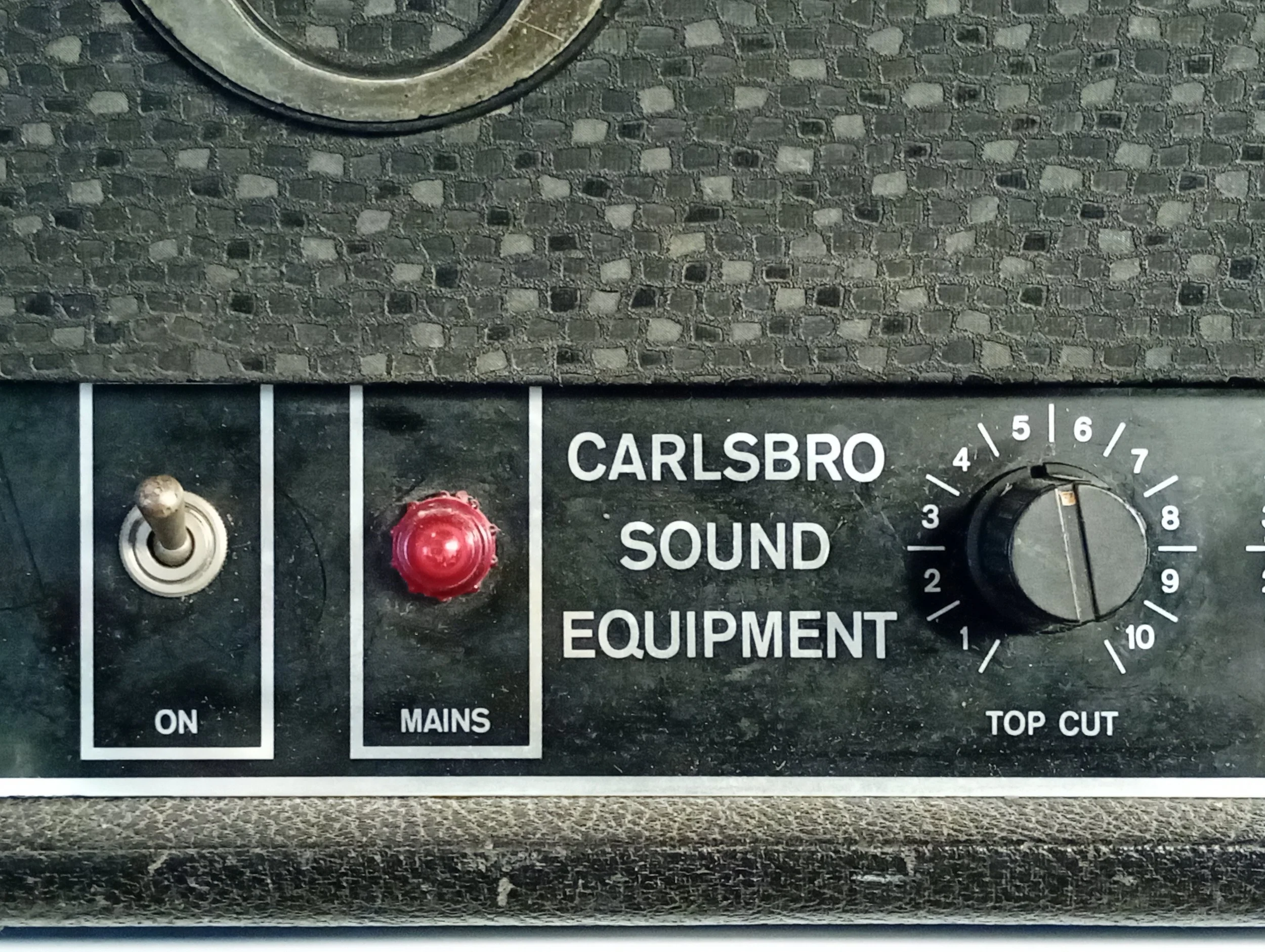 Image 5 of 21
 Image 6 of 21
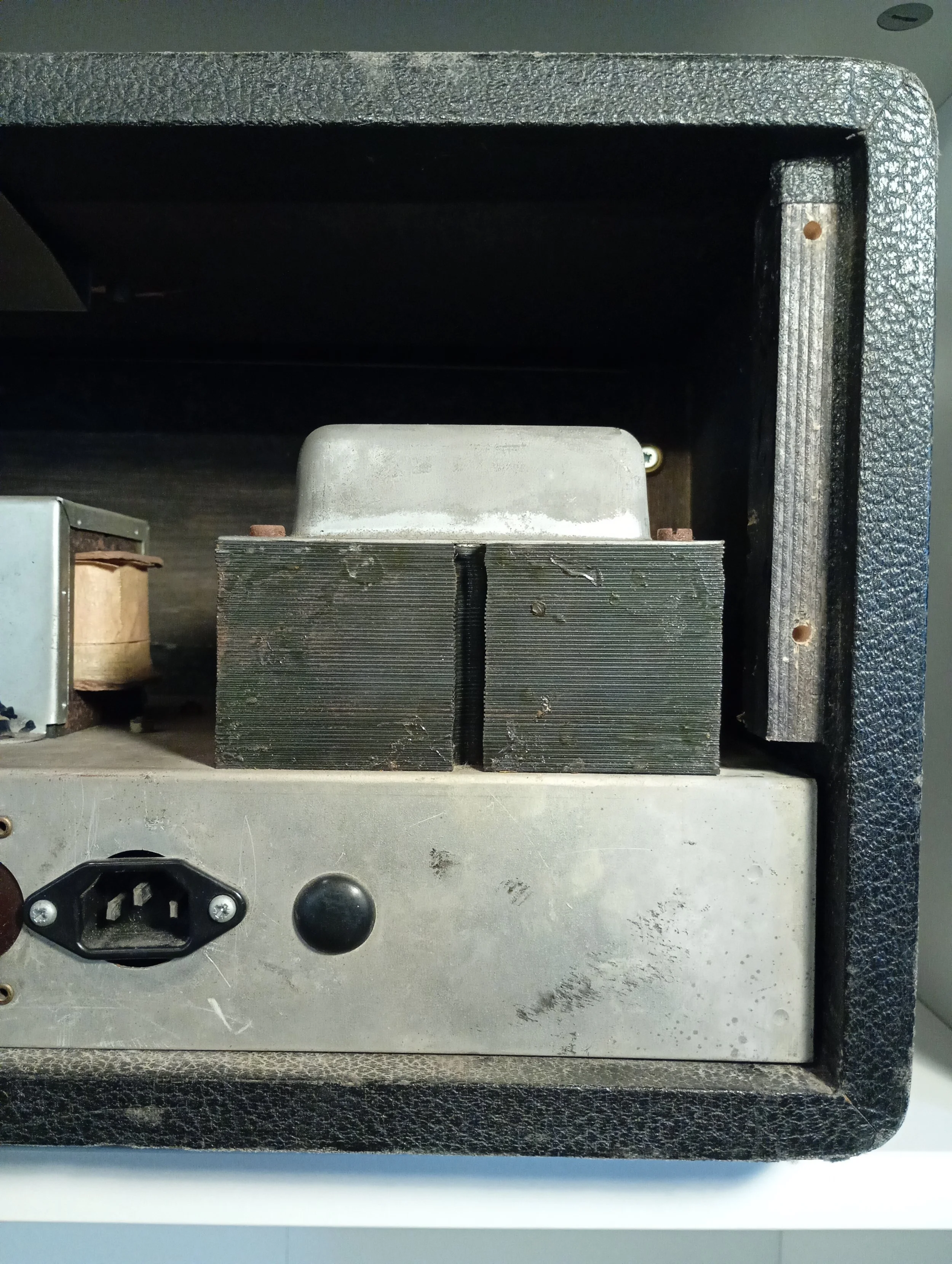 Image 7 of 21
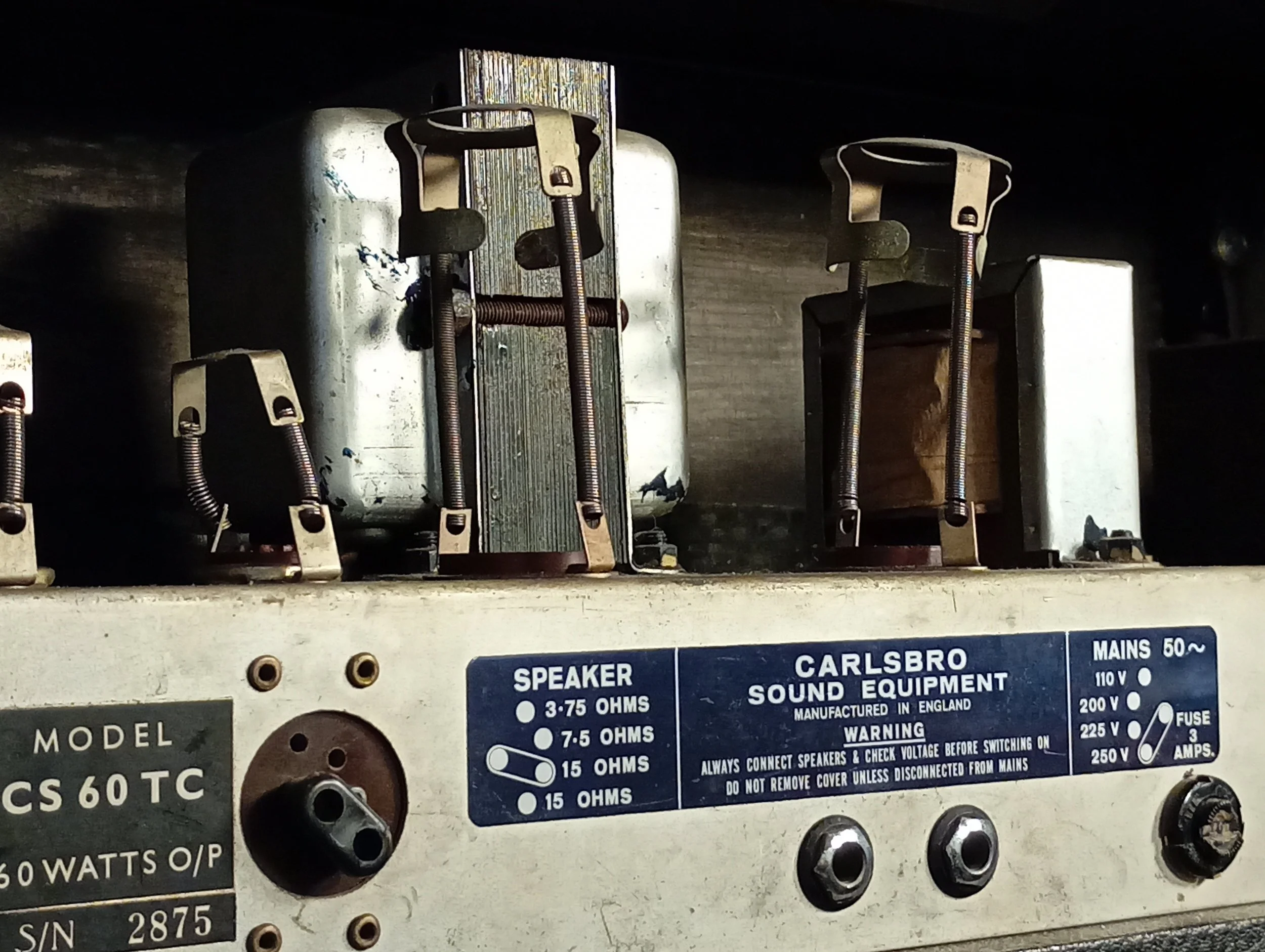 Image 8 of 21
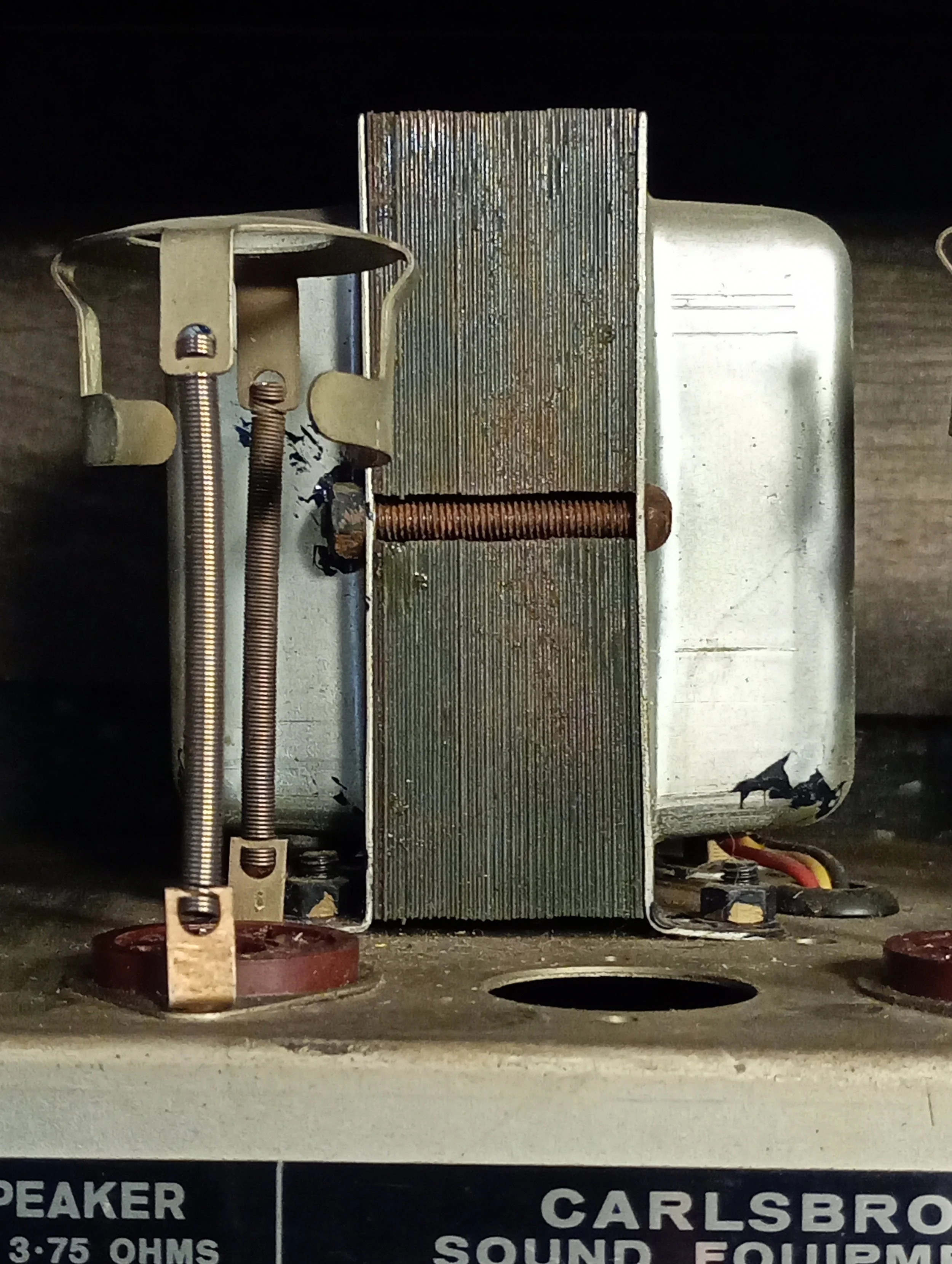 Image 9 of 21
 Image 10 of 21
 Image 11 of 21
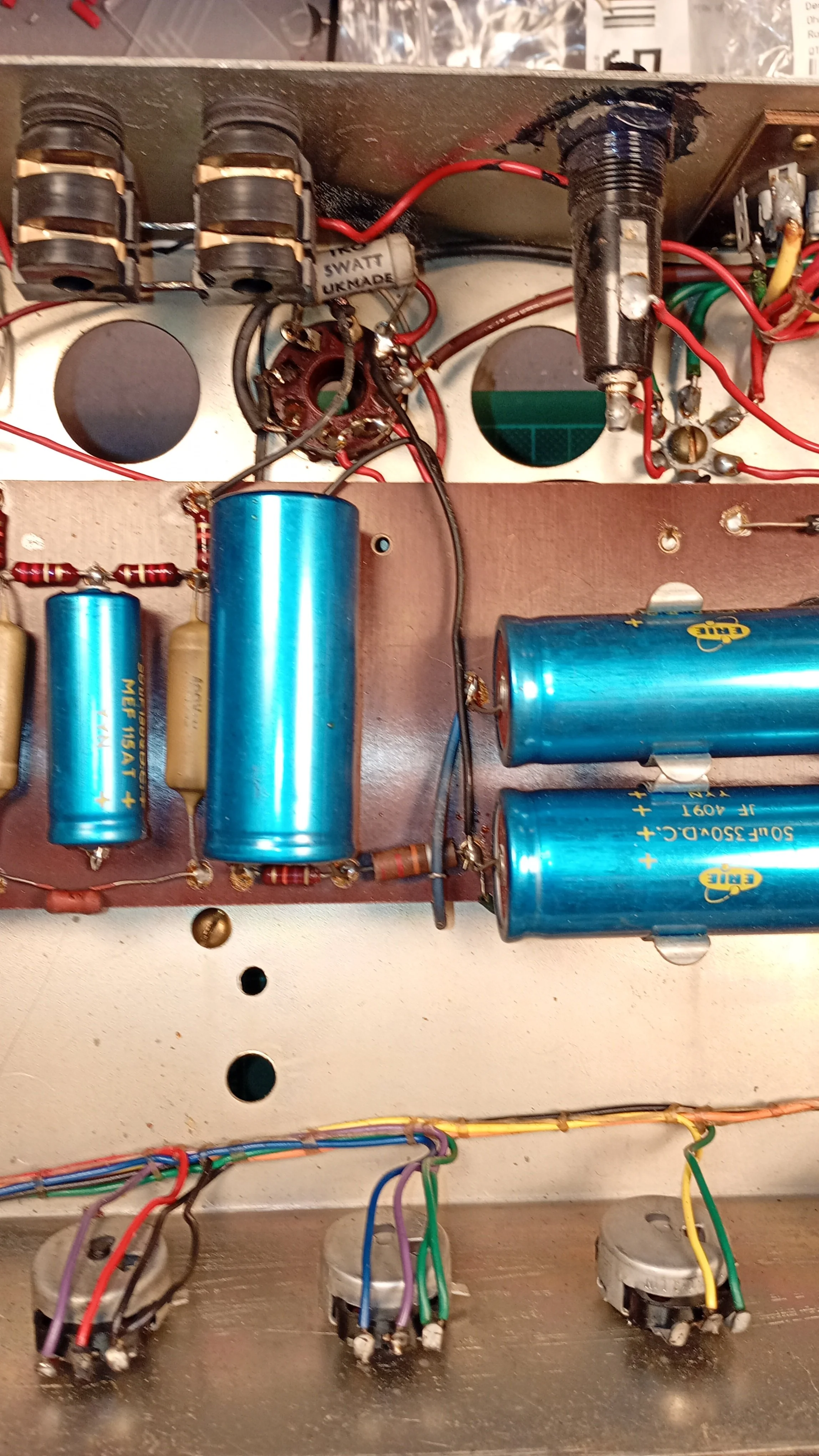 Image 12 of 21
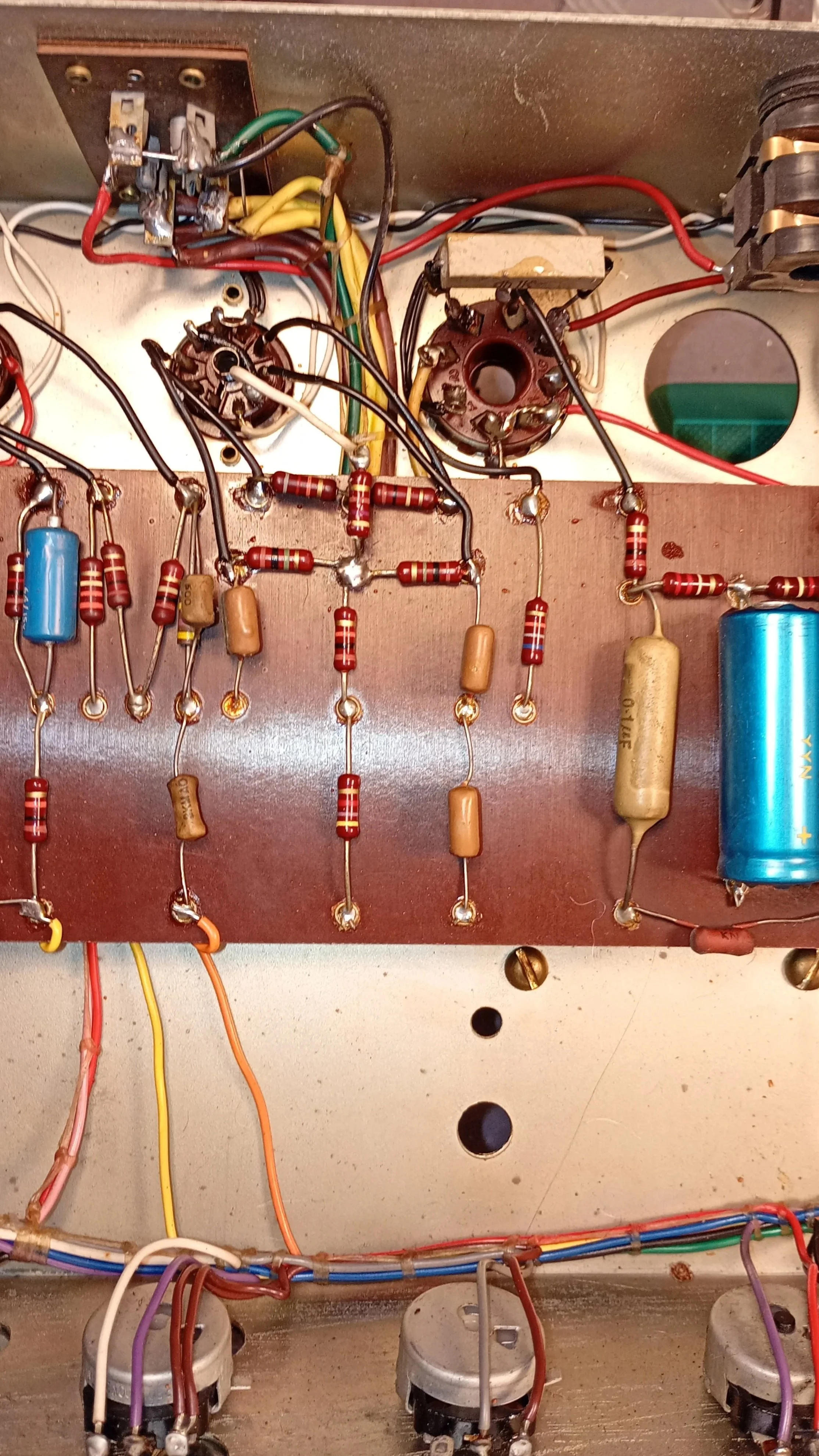 Image 13 of 21
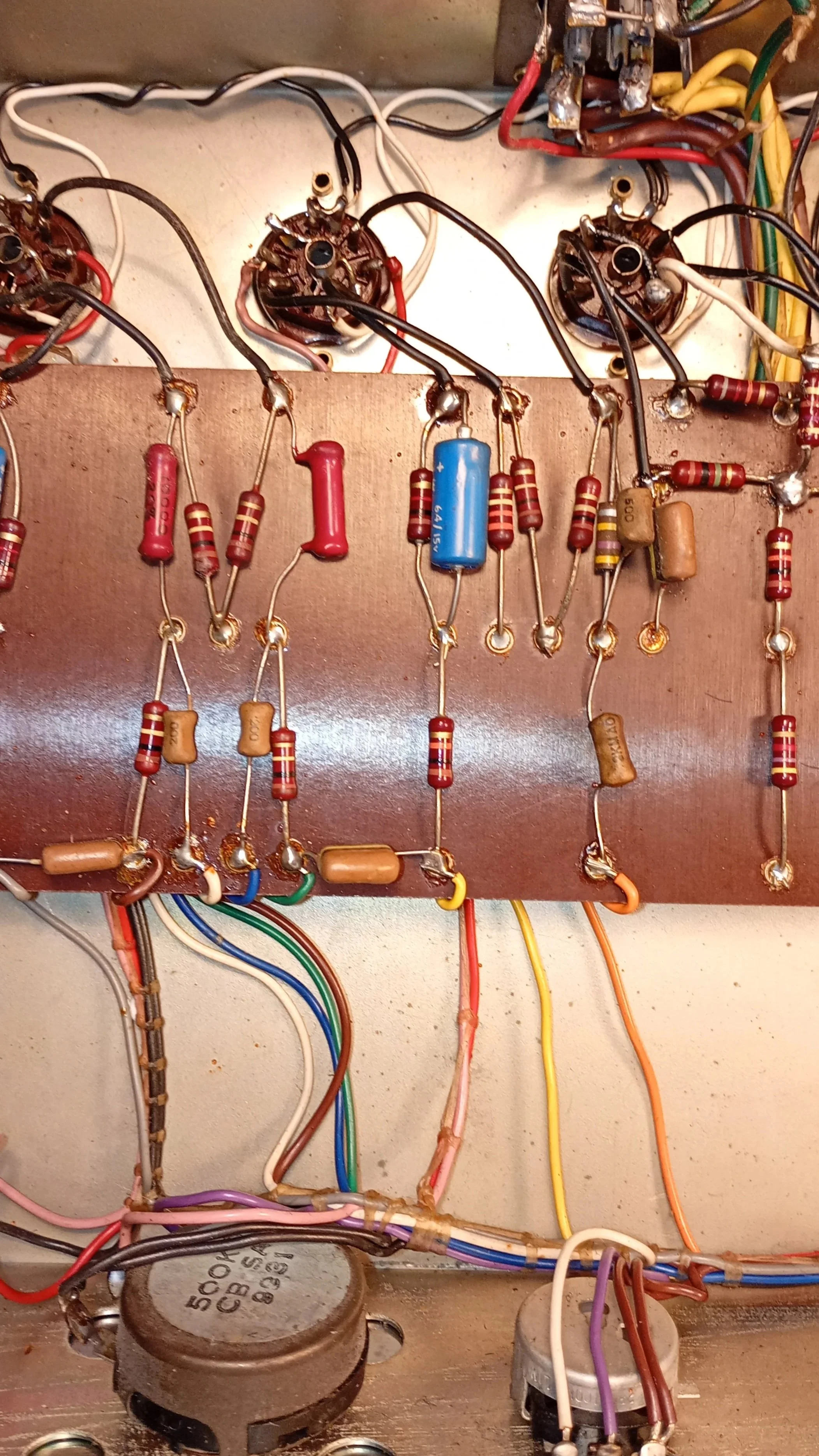 Image 14 of 21
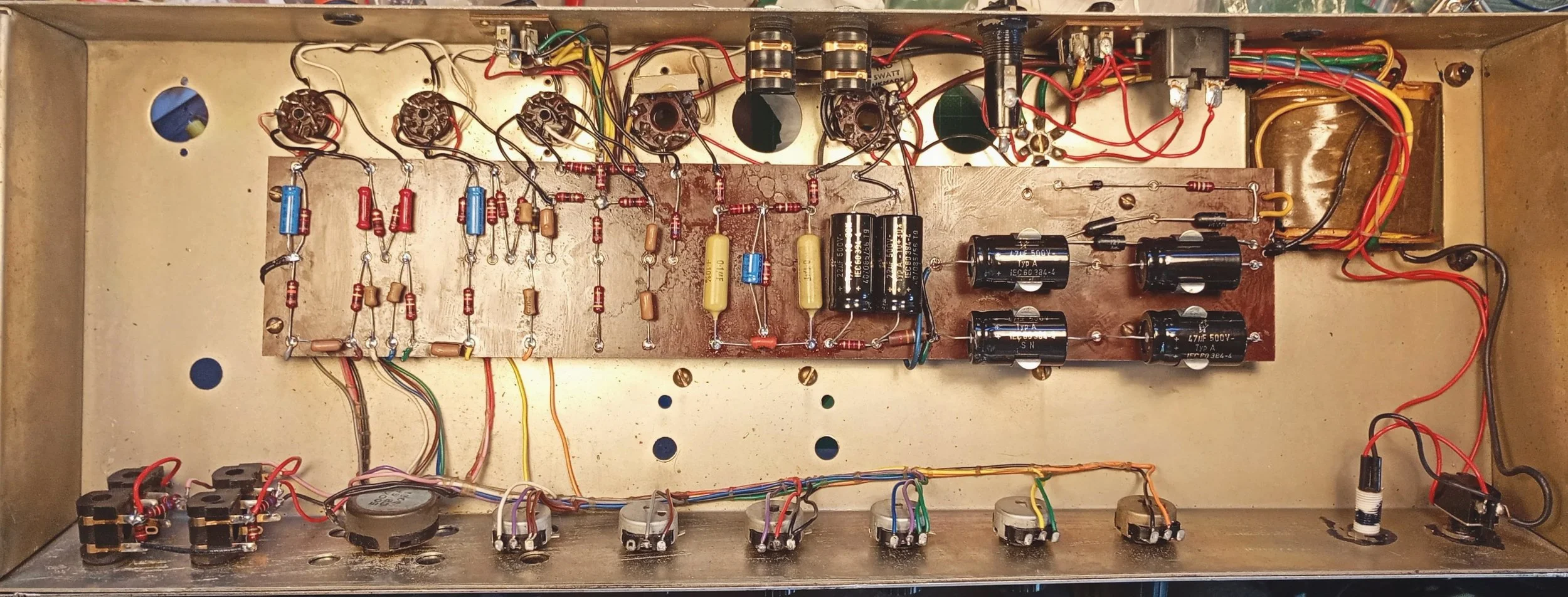 Image 15 of 21
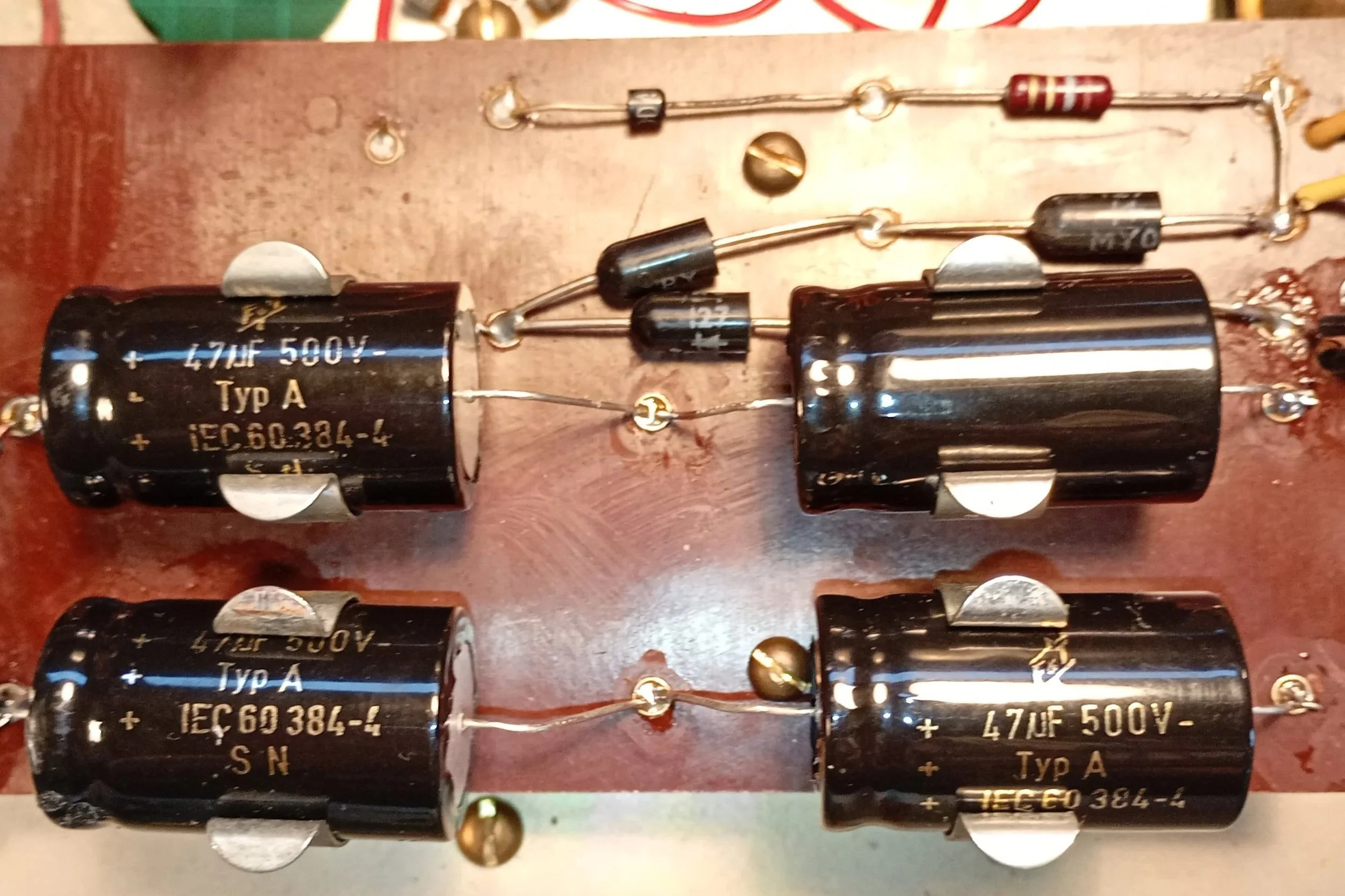 Image 16 of 21
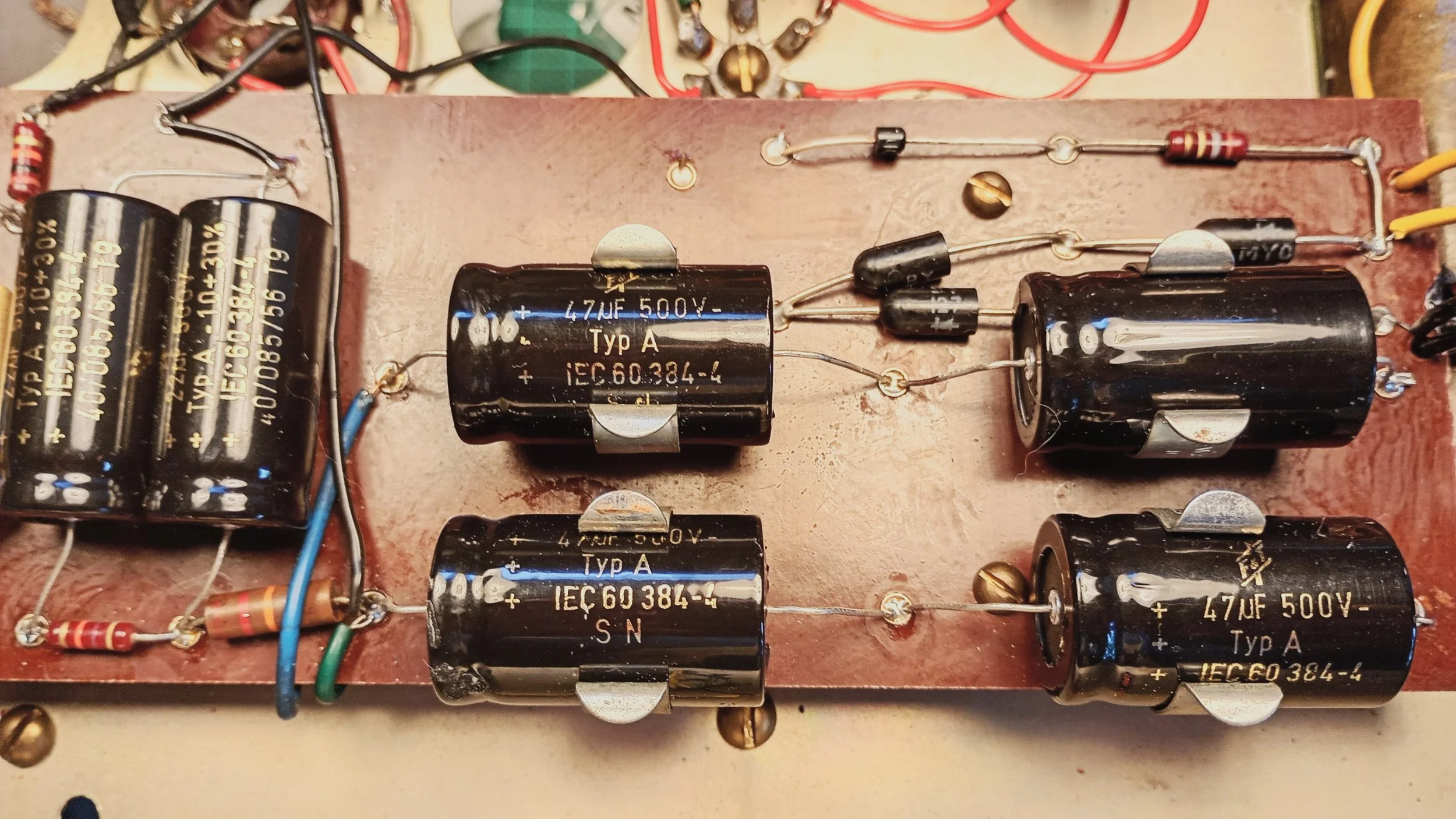 Image 17 of 21
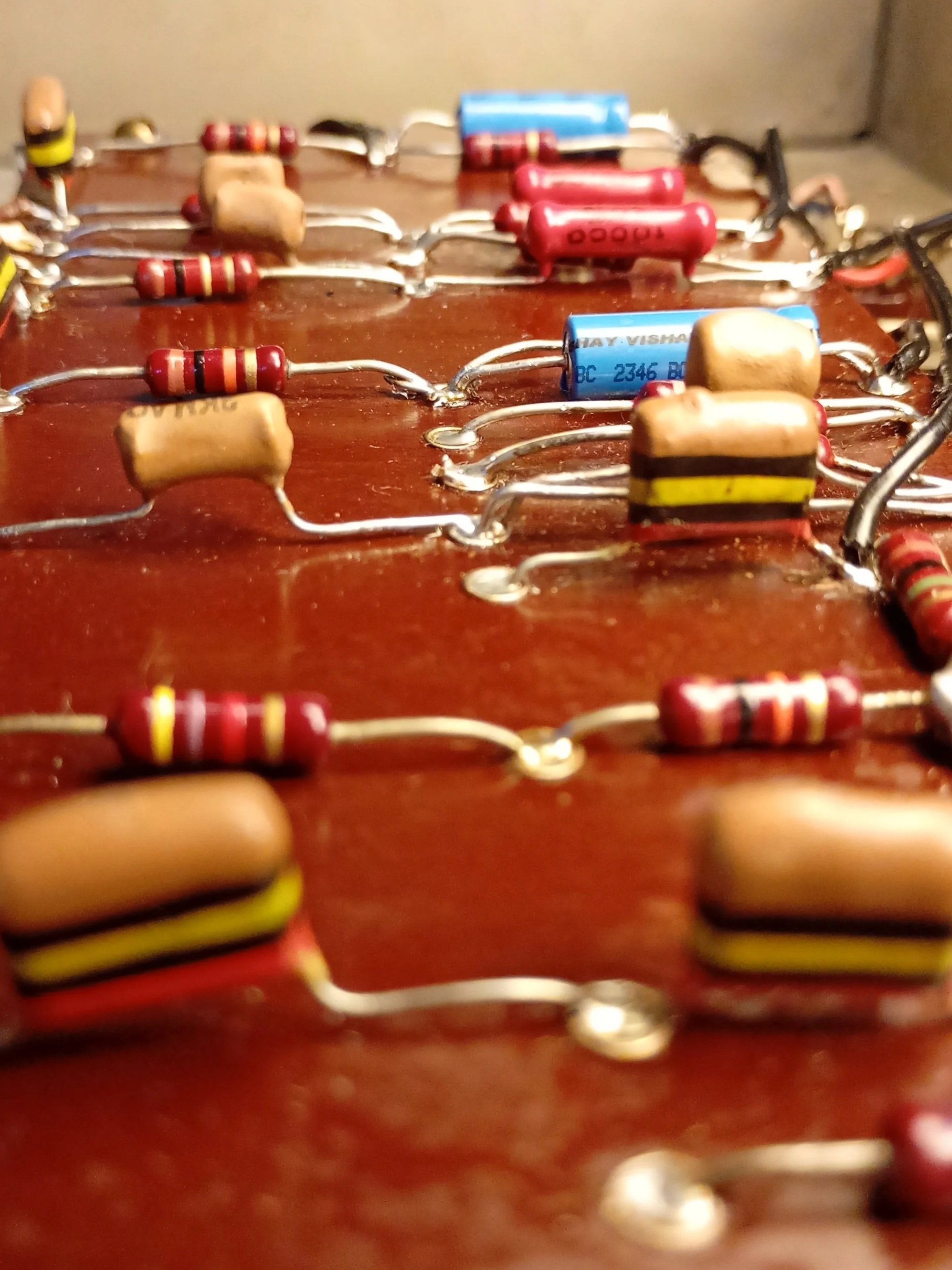 Image 18 of 21
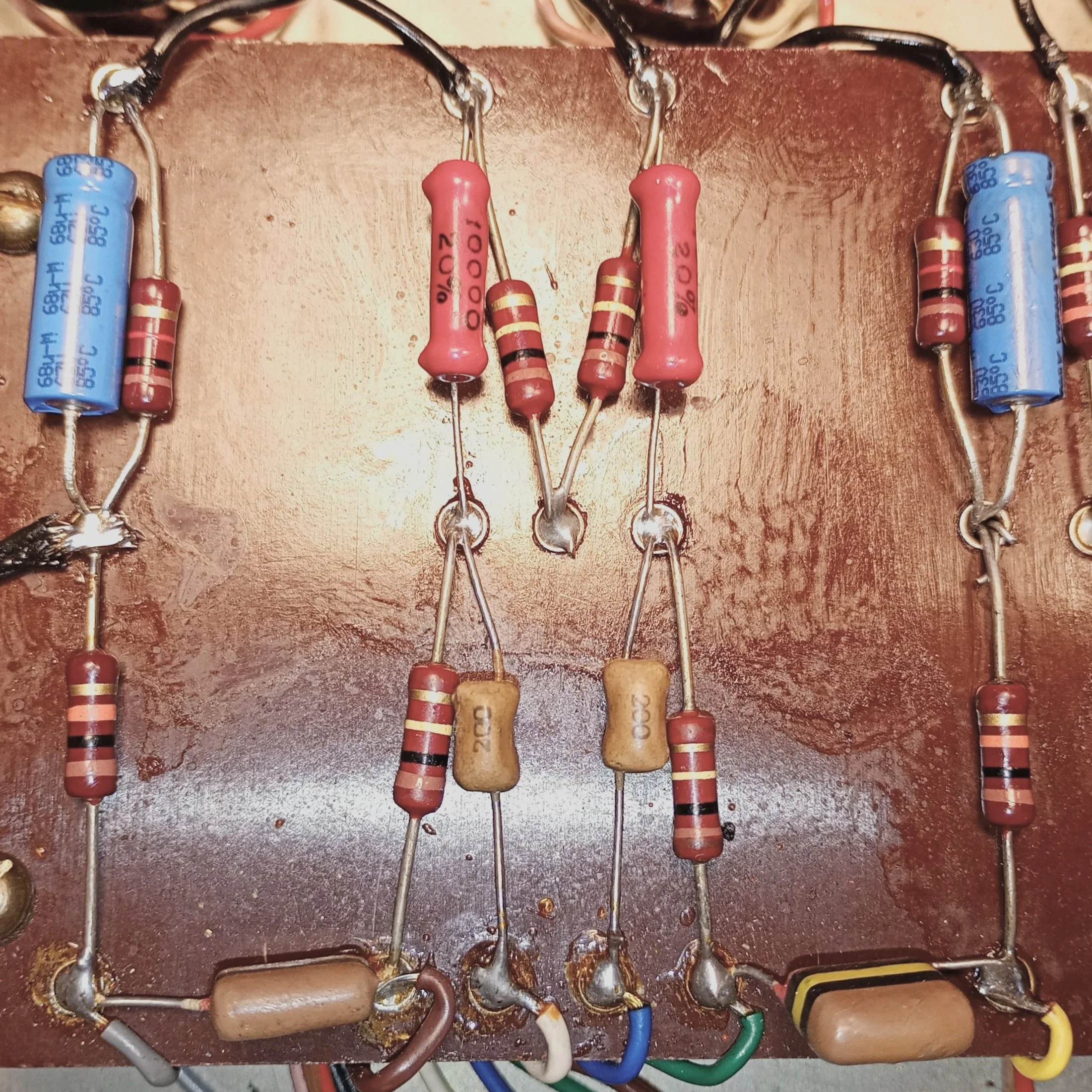 Image 19 of 21
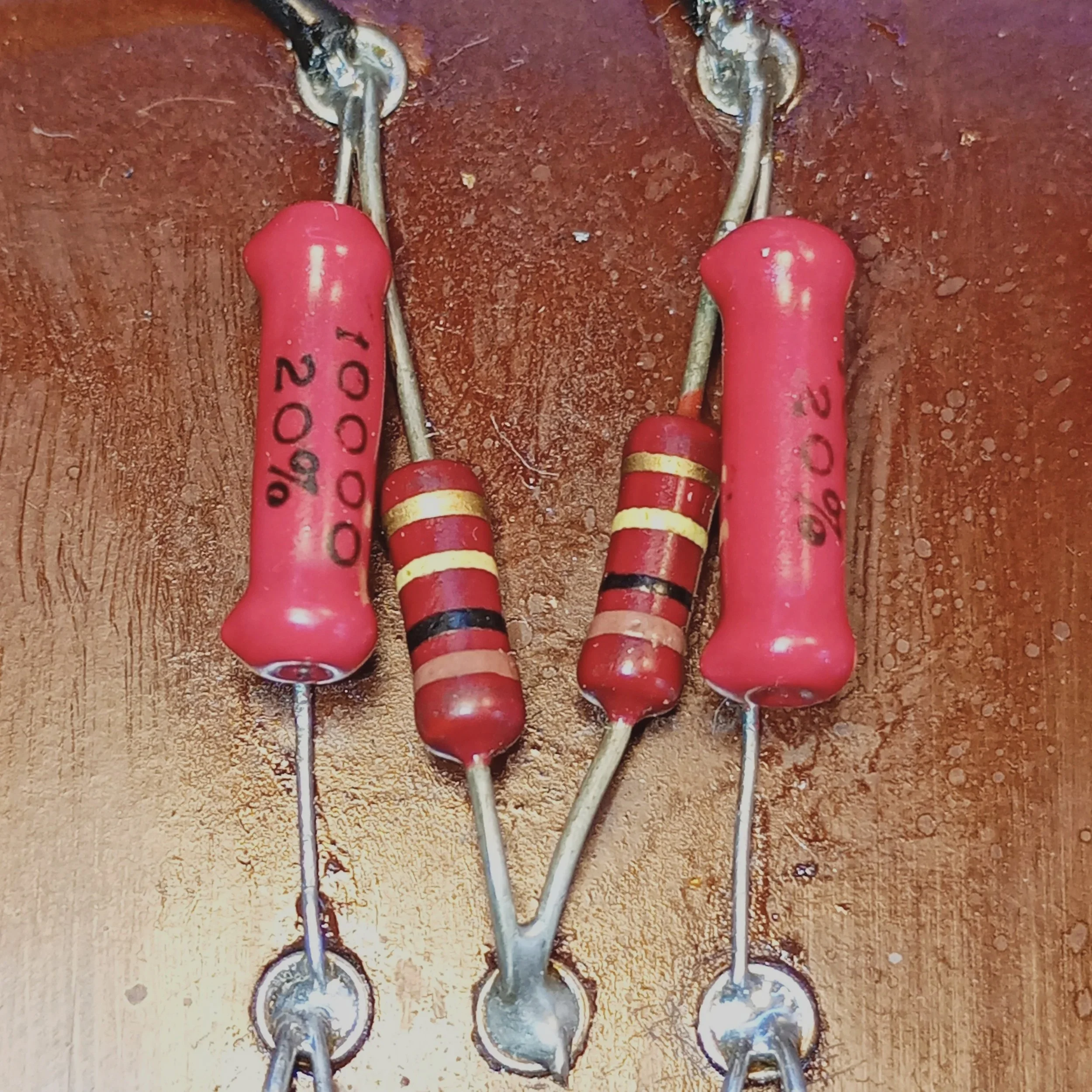 Image 20 of 21
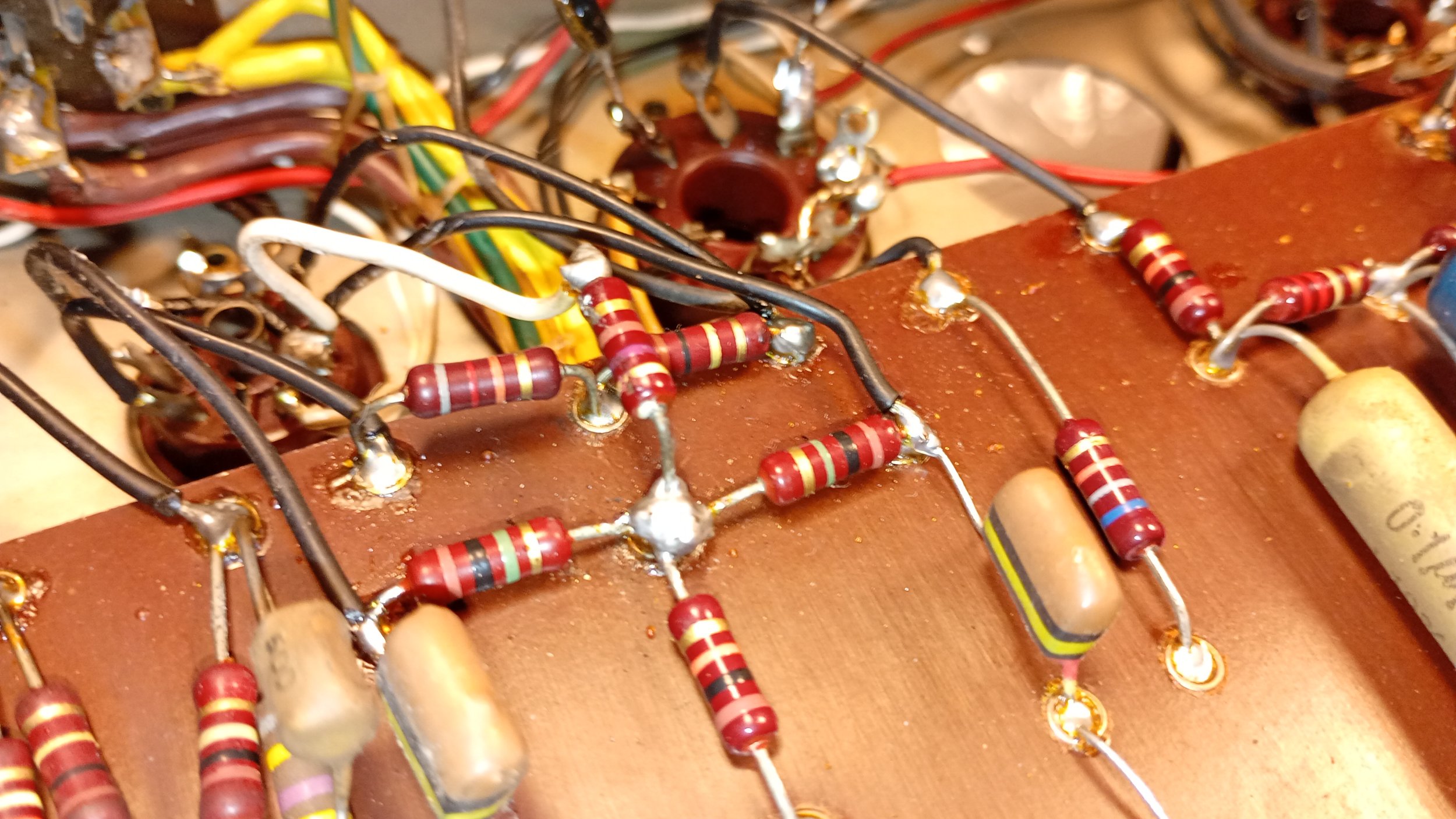 Image 21 of 21
Rebuild
On arrival the amp switched on, powered up and played very nicely with only a bit of crackling coming from the pots when adjusting. The response felt good and there was a lovely chime, crunch & bloom when turned up.
However, when playing through a Marshall Power Brake attenuator with the channels jumpered, we could hear the attentuator fan going full on, which, for the volume we were playing at seemed a bit strange. Further investigation turned up a high frequency oscillation which was producing a lot of output just above our hearing range.
Typically this can come from a failure with the phase invertor snubber capacitor or the power filter capacitors. Checks showed that the snubber cap was still in tolerence but replacing the 57 year old filter caps with some new F&Ts fixed the issue.
As part of the rebuild we:
Installed secondary HT fuses to each ‘leg’ of the power transformer to protect against rectifior failure.
Replaced the BY127 rectifior diodes with the modern equivilent 1N4007 diodes.
Installed TDK ceramic capacitors as rectifior snubber caps to further reduce power supply noise.
Replaced the power amp and pre-amp filter caps with F&Ts of equivalent capacitance and voltage.
Replaced the out-of-spec preamp bypass capacitors with Vishay electrolytics of equivalent capacitance and voltage.
Desoldered and then reflowed/re-soldered all the eyelet connections.
Checked & tested all resistors and capacitors against the schematic and the component values (see below) and ‘followed’ the signal and power paths to test for continuity/shorts
Replaced and dressed the heater wiring with heavier guage wire.
Dressed the amplifier wiring to seperate signal and power paths.
Made safe the rather sketchy power lead conversion.
Revoice
As in keeping with our Vintage amp service we didn’t make any changes to the voicing of the amp, and it sounds great as it is - a perfect British blend of Marshall crunch and Vox-esq chime. Happily all the non-electrolytic components in the amp tested almost perfectly in spec. We’re talking 57 year old carbon resistors and mustard capacitors mostly being within 0-5% of their given rating!
The capacitor types & values were:
Channel 1 (Treble)
V1B coupling capacitor - Philips red - Schematic 10,000pF - Measured 10,000pF
Tone stack Mid Cap - Mullard Tropical Fish - Schematic 0.1uF - Measured 0.102uF
Tone stack Treble Cap - Schematic 1200pF - Measured 1094pF
Top Cut Cap - Schematic 12000pF - Measured 2000pF - Measured 1440pF
V2B Treble Bypass Cap - Schematic 500pF - Measured 498pF
Channel 2 (Bass)
V1A coupling capacitor - Philips red - Schematic 10,000pF - Measured 10,000pF
Tone stack Mid Cap - Mullard Tropical Fish - Schematic 0.1uF - Measured 0.1uF
Tone stack Treble Cap - Schematic 1200pF - Measured 1092pF
Power amp
Pre-amp coupling cap - Schematic 0.1uF - Measured 0.1uF
Phase invertor subber cap - Schematic 50pF - Measured 60pF
V3A coupling cap - Mullard Mustard - Schematic 0.1uF - Measured 0.1uF
V3B coupling cap - Mullard Mustard - Schematic 0.1uF - Measured 0.1uF
Refurbish
For 57 years old, this beauty is doing pretty well so we stuck to just a general clean, inside and out.
This involved:
Cleaning the eyelet board and removing old flux and corrosion from any off board solder joints.
Clean and light polish of the chassis.
Clean & light polish of the handle, to remove any rust or corrosion marks.
Repairing the back cover and chassis insulation plate.
Careful cleaning of the tolex and amp front/rear control plates.