
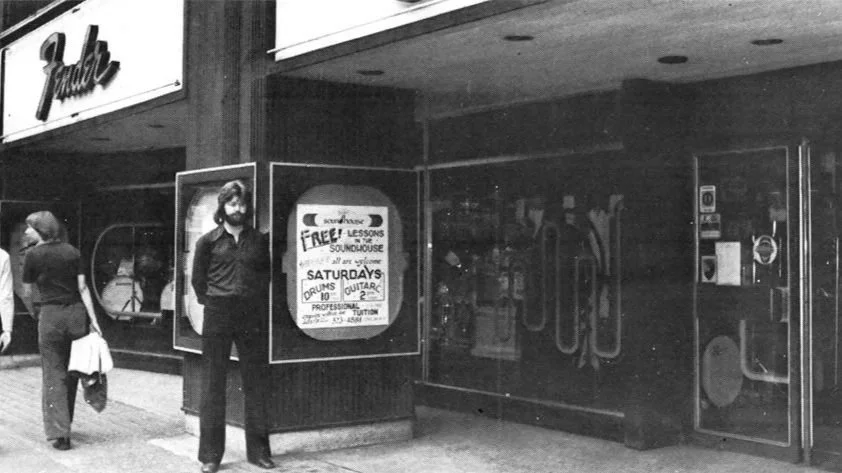
The Fender-Soundhouse 1973
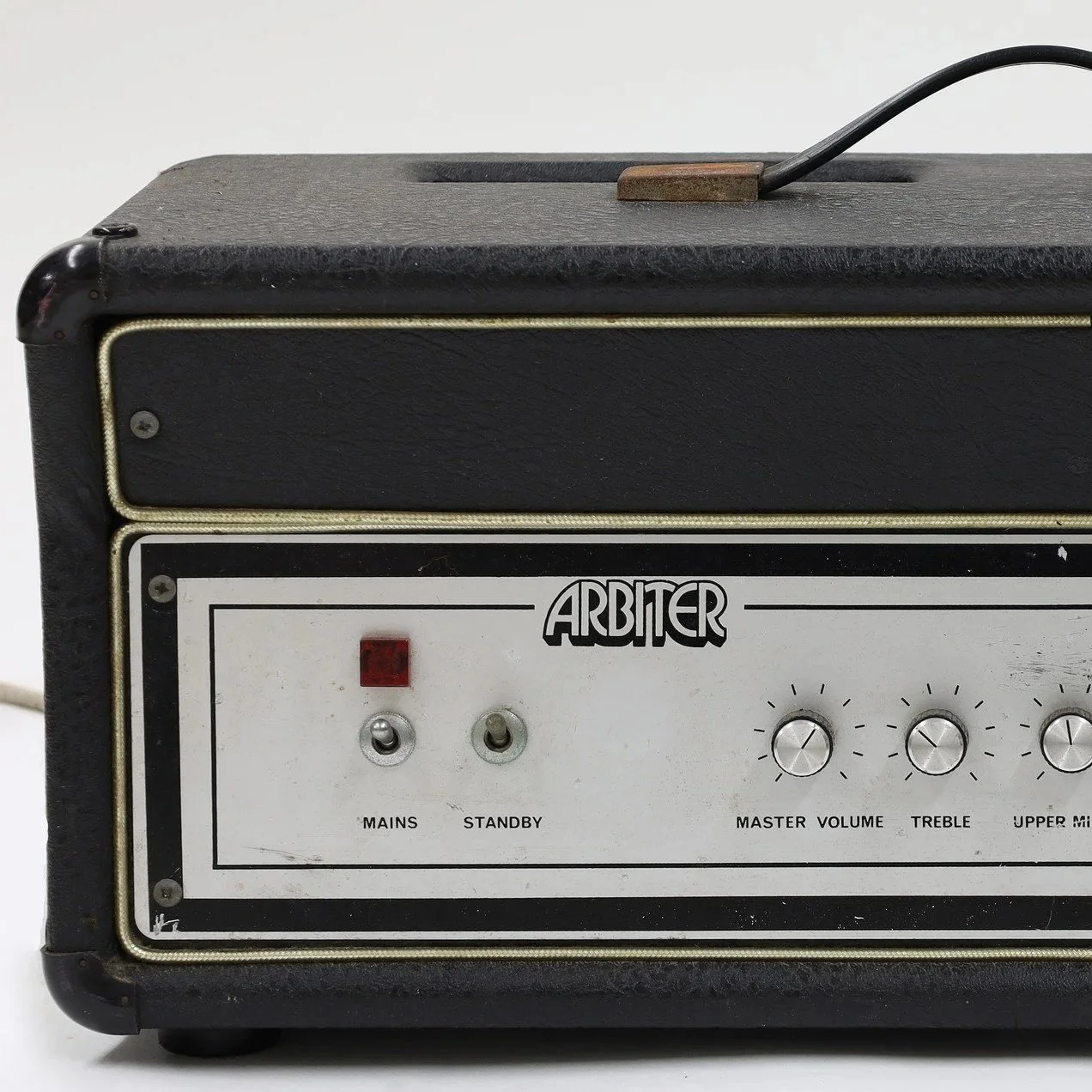
Arbiter
The history
If you haven’t heard of Ivor Arbiter (and you probably haven’t) then this will be an introduction to a legend of the UK music scene.
Ivor Arbiter was an English drum designer, manufacturer, instrument salesman, and entrepreneur who, in his career, founded or co-founded several instrument companies, including Arbiter–Western, Dallas–Arbiter, Hayman drums and CBS–Arbiter. He is also credited with designing the Beatles' original drop-t logo, and bringing karaoke to the UK.
Ivor started off as a drummer and opened Drum City, one of the region's first instrument specialty shops on Shaftesbury Avenue, London. The success of that store led to another shop Sound City, which sold guitars and amplifiers, and then the creation of Arbiter-Western, an instrument manufacturer.
In 1967 financial difficulties, led to the Arbiter company being bought by it’s rival John E. Dallas & Sons, with Ivor Arbiter staying as deputy chairman. The success of the merge led to the renaming of the company to Dallas-Arbiter, more known now days for the Fuzz-Face guitar pedal.
Personality conflicts led to Ivor leaving Dallas-Arbiter in 1969, however he quickly returned to the scene by partnering with CBS, who had recently bought Fender, and launched CBS-Arbiter taking over the distribution of CBS’ intruments throughout Europe
In 1973 Ivor opened the ‘Fender-Soundhouse’ on London’s Tottenham Court Road, the name Soundhouse coming from the original idea that it was to be opposite the Roundhouse, a famous music venue in London
Ivor was always more interested in the players and musicians rather than the business and his aim for the Soundhouse was ‘not to succeed by a series of one-off rip-offs, but to build up a relationship with customers that will last. "We have 12 year old kids coming in who will buy an Arbiter guitar for £20, and we want to make sure that it suits them. In five years he may be the new guitar hero. We want to build up trust, and a continuing relationship."‘
The Amplifiers
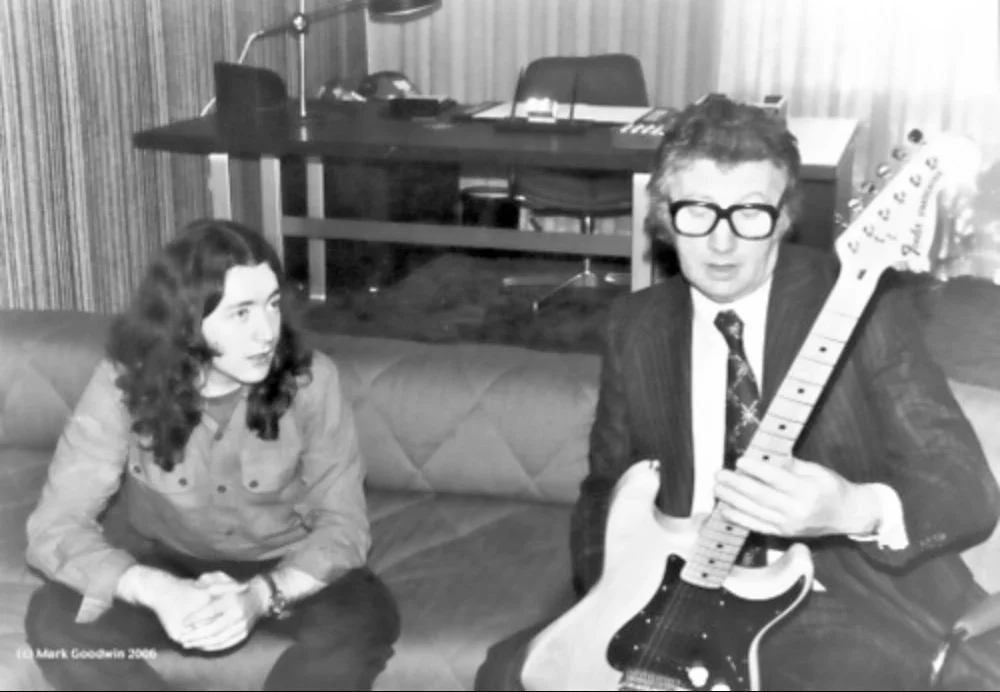
Ivor Arbiter with Rory Gallagher
Soundcity
Inextricably linked with Hiwatt, Sound City was designer Dave Reeves' first foray into manufacturing, working either as a contractor or an employee (accounts differ) for the distributor Dallas-Arbiter. Reeves initially built 100-watt tube heads in the back of the Sound City shop in London, eventually settling on the L100 amp design, which was launched in 1967.
As with the amps Reeves later produced under the Hiwatt name, these were loud and a lot cleaner than the Plexi Marshalls they competed against. It was a formula much liked by The Who—they immediately became users and were soon followed by Jimi Hendrix, who sometimes used Sound City stacks alongside his Marshalls.
Under Dallas-Arbiter came the ‘Sound City’ amps which, after remaing under the radar for many years, are starting to be recognised for their great sound. This has also been helped by the fact that Dave Reeves of Hiwatt fame was responsible for the early designs/builds. Known for being loud, reliable, and affordable, they were used by artists like The Who and Jimi Hendrix.
After Reeves left to go solo, Sound City carried on, led by Denis Cornell (who is still in business as a boutique builder). Though it is said Dallas-Arbiter wanted to sacrifice some of Reeves's obsession with quality, Cornell's Sound City offerings are not to be sniffed at. The 200 was a KT88-powered 200-watt monster that stands comparison with the Marshall Major. It's well worth tracking one down, especially if you have the taste for clean and loud—and you look forward to becoming a good customer for a hearing aid specialist.
Soundhouse
Impact
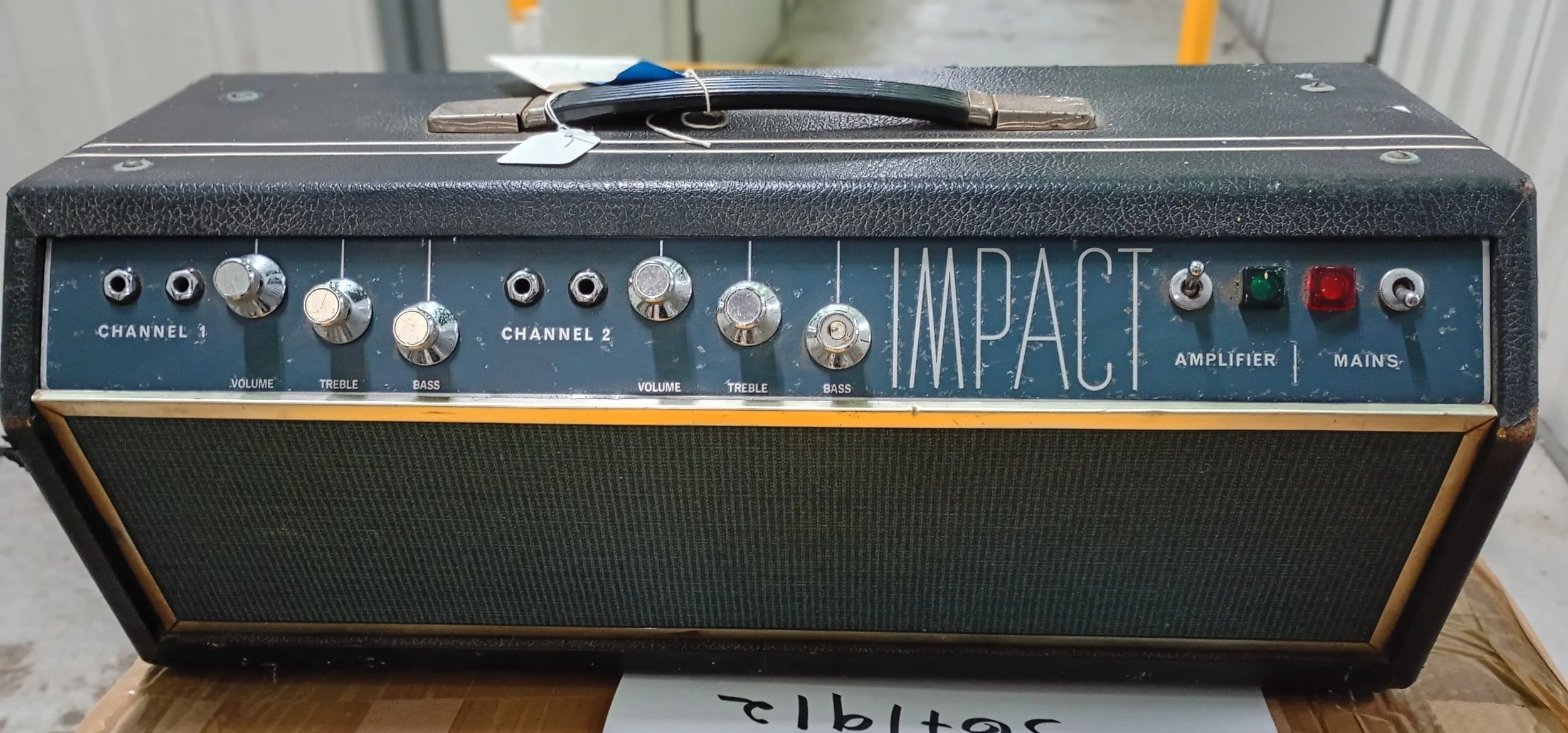
Impact Amplifiers was started in London in 1963 by Don Mackrill and Laurie Naiff under the company ‘Pan Musical Instruments Co. ‘. The factory was located in Wardour Street, Soho, and the company also had some music stores around London. Around the beginning of the 70's the Impact business was sold to Dallas-Arbiter
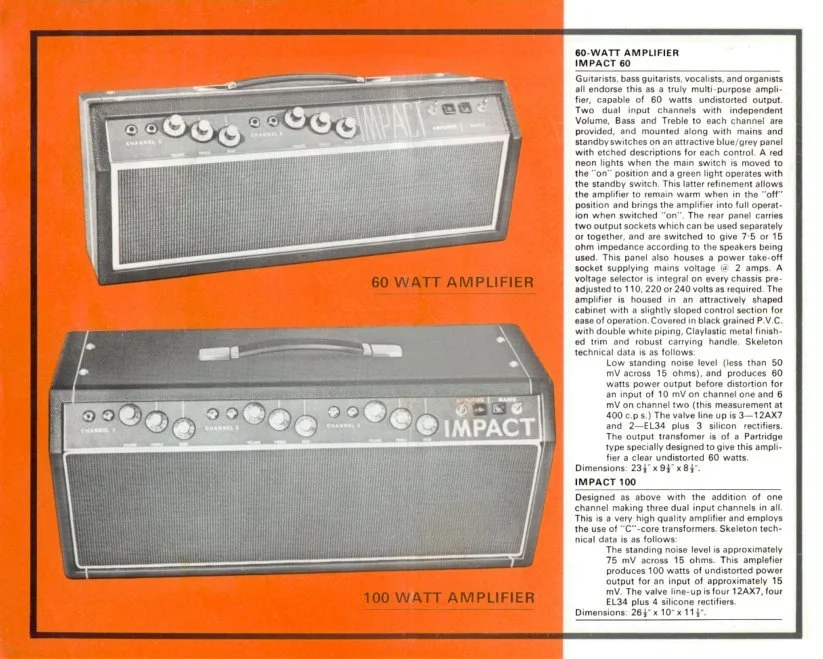
The Impact 60 head was the most common and popular model. It appears in two versions with minor differences, one with a brighter sound, probably intended for microphones. There's also a version with Reverb and Tremolo included. The amps are handwired point to point with a simple lay out, two channels, one voiced for bass, the other for guitar, you can of course jump the channels and use both.
The Impact 100 has the same preamp as the Impact 60, however the power amp section is almost a blueprint from the Vox 80/100 amp, the forerunner for the AC-100. It has four cathode-biased EL34 power tubes, running very hot, for most tubes abowe their maximum capability.
Later amps were called "Impact by Status", and were manufactured after the Dallas-Arbiter takeover. They are really Sound City amps in Impact-styled cabinets, one model with the S.C. 50+, and one with a S.C. 120 amp. Status itself was really a string manufacturer within the Dallas Arbiter group.
Early 1970’s Sound City L120 MKIV head made in the Dallas-Arbiter era.
120 watts, with active EQ.